


The impact of ADA’s activities on young entrepreneurs

04 December 2025 News
Une femme africaine tient dans la main un polo blanc et orange

ADA has released its first impact report based on impact analyses which assess how effectively ADA’s programmes improve the living conditions of vulnerable people between 2022 and 2024 while identifying areas for improvement. Young entrepreneurs are one of the analysed groups of vulnerable people.

Young people aged 15 to 35 make up a large share of the population in Africa, Central America and Asia, yet many are unemployed and not in education or training. This makes them one of the most socio-economically vulnerable groups. Although young people are often seen as potential entrepreneurs because of their dynamism and appetite for innovation, financial institutions frequently consider them high-risk due to their limited experience and lack of collateral. 

ADA’s experience in supporting youth entrepreneurship

Since 2008, ADA has supported youth entrepreneurship by working with microfinance institutions to tailor financial products to young micro-entrepreneurs. Early experience showed that access to credit alone was not enough: young people also need training to manage their businesses and finances effectively. This requires strong collaboration between financial institutions and supporting experts. Despite these efforts, not all the selected young people were suited to self-employment and it was challenging to make their businesses viable in the long term.

To increase its impact in terms of maintaining and creating jobs for young people, ADA therefore refocused its interventions on young entrepreneurs who already run small businesses with growth potential in 2020. To meet their needs with specialised services in a holistic manner, ADA now partners with a broader set of actors including incubators, microfinance institutions and banks.

Lessons learned and outlook

The impact report identifies the following lessons learned from ADA’s programmes that address the needs of young entrepreneurs:

  • Identifying small, growing businesses run by young people is challenging. This led ADA to broaden its target to include businesses run by older entrepreneurs but mainly employing young people.
  • Strengthening incubators is essential so they can fully support entrepreneurs in partnership with financial institutions and other support providers. Incubators must improve their financial expertise and organisational capacities, including strategic planning, sustainable business models and management skills.
  • Businesses grow slowly and do not generate jobs immediately. Startups are fragile and growth in revenue does not immediately translate into job creation, as profits are often reinvested before hiring. Entrepreneurship support programmes only generate employment when they are long-term or when they target businesses that are already relatively mature.
  • Maximising employment impact requires concentrating on more mature businesses with a strong potential to create jobs. ADA will therefore support larger SMEs with clear growth prospects, strengthening their value chains both upstream and downstream. Job creation not only results directly from salaried positions within SMEs but also indirectly from self-employment opportunities generated through stable, long-term relationships between micro-entrepreneurs and these growing SMEs. Greater emphasis will be placed on businesses and value chains with a social or environmental impact.

Further information can be found in the impact report, which also analyses the Young Entrepreneurs Sustainable Financing Initiative (YES-FI) programme in detail.

Image
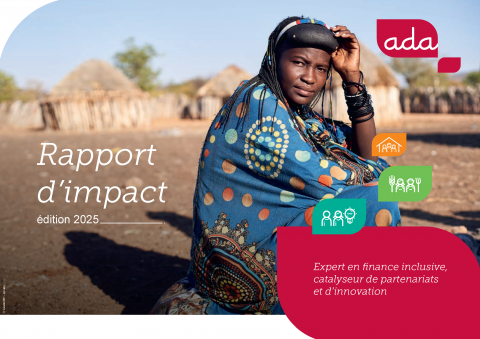
Rapport d'impact couverture